
 6 months ago
28
6 months ago
28
ARTICLE AD BOX
- Home
- AI Prompt Use
- How to Build a Stateless, Secure, and Asynchronous MCP-Style Protocol for Scalable Agent Workflows
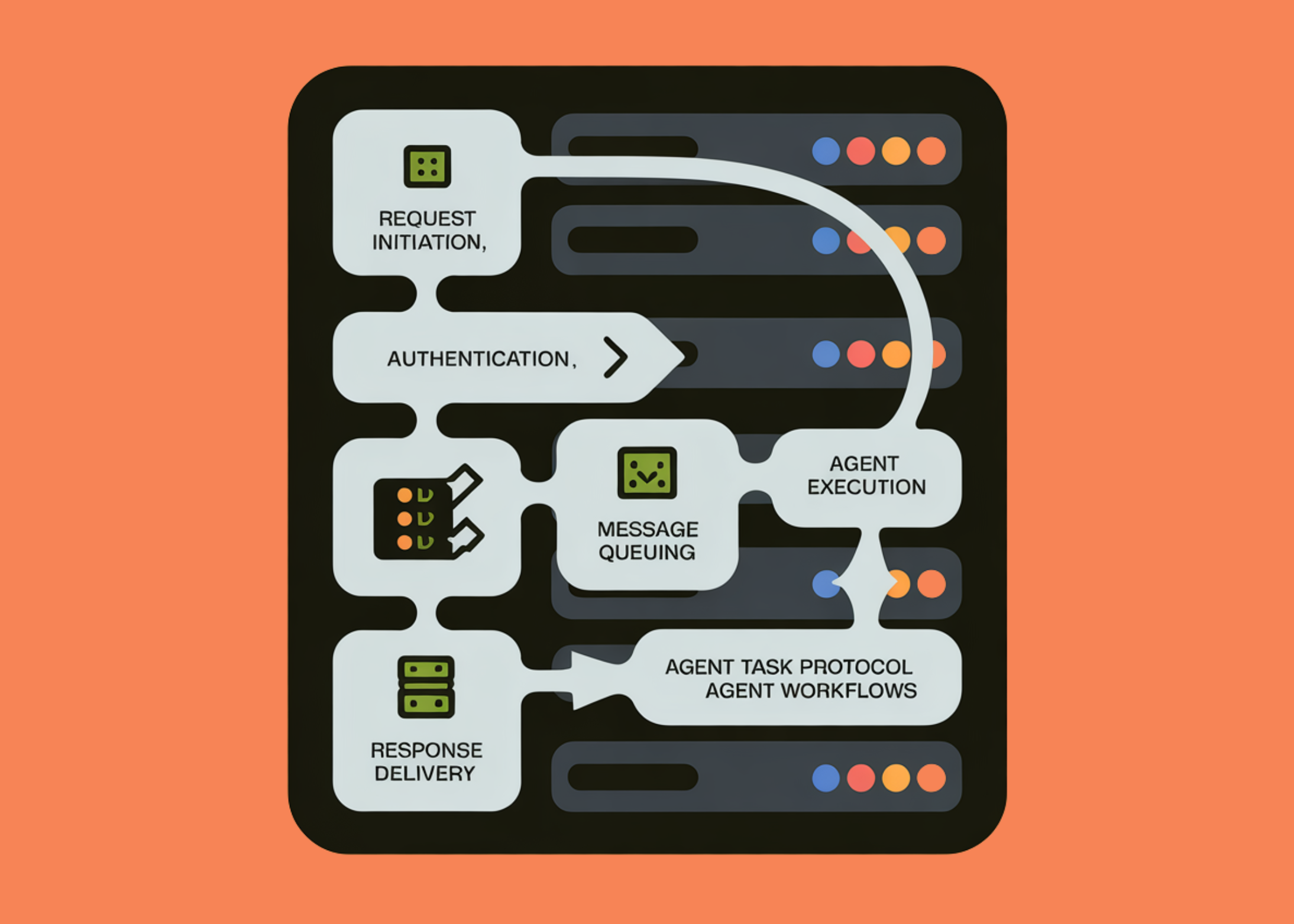
In this tutorial, we build a clean, advanced demonstration of modern MCP design by focusing on three core ideas: stateless communication, strict SDK-level validation, and asynchronous, long-running operations. We implement a minimal MCP-like protocol using structured envelopes, signed requests, and Pydantic-validated tools to show how agents and services can interact safely without relying on persistent sessions. Check out the FULL CODES here.
We set up the core utilities required across the entire system, including time helpers, UUID generation, canonical JSON serialization, and cryptographic signing. We ensure that all requests and responses can be deterministically signed and verified using HMAC. Check out the FULL CODES here.
We define the structured MCP envelope and response formats that every interaction follows. We enforce strict schemas using Pydantic to guarantee that malformed or unexpected fields are rejected early. It ensures consistent contracts between clients and servers, which is critical for SDK standardization. Check out the FULL CODES here.
We declare the validated input and output models for each tool exposed by the server. We use Pydantic constraints to clearly express what each tool accepts and returns. It makes tool behavior predictable and safe, even when invoked by LLM-driven agents. Check out the FULL CODES here.
We implement the stateless MCP server along with its async task management logic. We handle request verification, tool dispatch, and long-running job execution without relying on session state. By returning job identifiers and allowing polling, we demonstrate non-blocking, scalable task execution. Check out the FULL CODES here.
We build a lightweight stateless client that signs each request and interacts with the server through structured envelopes. We demonstrate synchronous calls, input validation failures, and asynchronous task polling in a single flow. It shows how clients can reliably consume MCP-style services in real agent pipelines.
In conclusion, we showed how MCP evolves from a simple tool-calling interface into a robust protocol suitable for real-world systems. We started tasks asynchronously and poll for results without blocking execution, enforce clear contracts through schema validation, and rely on stateless, signed messages to preserve security and flexibility. Together, these patterns demonstrate how modern MCP-style systems support reliable, enterprise-ready agent workflows while remaining simple, transparent, and easy to extend.
Check out the FULL CODES here. Also, feel free to follow us on Twitter and don’t forget to join our 100k+ ML SubReddit and Subscribe to our Newsletter. Wait! are you on telegram? now you can join us on telegram as well.
The post How to Build a Stateless, Secure, and Asynchronous MCP-Style Protocol for Scalable Agent Workflows appeared first on MarkTechPost.
What's Your Reaction?
 Like
0
Like
0
 Dislike
0
Dislike
0
 Love
0
Love
0
 Funny
0
Funny
0
 Angry
0
Angry
0
 Sad
0
Sad
0
 Wow
0
Wow
0

Suraj Manikpuri Hi, I’m Suraj Manikpuri, an Engineer with over 15 years of industrial experience and a deep passion for technology and artificial intelligence. My professional journey has allowed me to work across diverse industries, where I’ve gained hands-on expertise in problem-solving, system optimization, and applying innovative tech solutions to real-world challenges. For the past 15 years, I’ve dedicated myself to learning and experimenting with technology — not just from books or tutorials, but through real practical exposure. My curiosity about how emerging tools work led me to explore and personally test numerous AI tools and platforms. By experimenting first-hand, I’ve been able to understand how artificial intelligence is transforming industries, creativity, and the way we live and work. Through FutureTrendHub.com, I share insights drawn from my personal experience, technical knowledge, and continuous learning in the fields of AI, automation, and modern technology trends. My goal is to make complex topics simple, engaging, and useful for readers who want to stay informed and future-ready. I believe in learning by doing, and my approach to content creation reflects that philosophy. Each article I write is backed by real-world experience, research, and an engineer’s perspective — to ensure it’s accurate, practical, and valuable for both tech enthusiasts and professionals. Technology is evolving faster than ever, and I’m here to help others understand and harness its power. Let’s explore the future together.




 English (US) ·